By Mohamed Miah
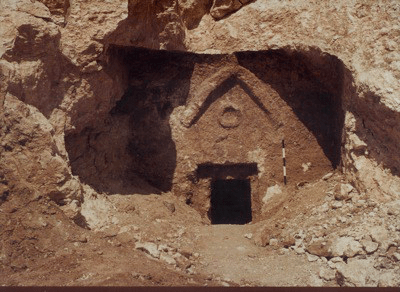
In 1980, during routine construction work in East Talpiot, Jerusalem, a rock-cut tomb was unearthed. At the time, it was just another ancient burial site in a region steeped in history. Fast forward to 2007, and this forgotten discovery became the centre of controversy thanks to The Lost Tomb of Jesus, a documentary by Simcha Jacobovici and James Cameron, which boldly claimed this was the final resting place of Jesus of Nazareth and his family.
For some, the theory seemed like an earth-shattering revelation. But for others, like me, it felt like yet another attempt to cast doubt, sow confusion, and undermine the sacred. And here’s the truth: this wasn’t just about archaeology—it was about faith, and the subtle, deliberate way certain ideas are planted to make people question everything they believe.
Let’s take a closer look at this so-called “discovery” and, more importantly, why claims like these aren’t just flawed—they’re part of a broader agenda to detach people from faith.
Coincidence or Conspiracy?
The Talpiot Tomb contained ossuaries—limestone boxes used to store bones after decomposition. Several of these were inscribed with names, including “Yeshua bar Yosef” (Jesus, son of Joseph), “Maria” (Mary), and “Yose” (a common diminutive for Joseph). At first glance, this sounds compelling. Could this really be the family of Jesus?
Here’s where the theory falls apart: these names were incredibly common in 1st-century Judea. “Yeshua” (Jesus) was one of the most popular male names of the time, and “Maria” (Mary) was practically everywhere. If you were to dig up 10 random tombs from that period, you’d likely find similar clusters of names.
The supposed “statistical significance” touted by the documentary crumbles when you realise this. It’s not a smoking gun; it’s a coincidence dressed up as a revelation.
What History Actually Tells Us
The idea that Jesus was buried in a family tomb contradicts everything we know about him. Jesus of Nazareth wasn’t a wealthy man—he was a Galilean preacher with no worldly possessions, and his family were humble, working-class people. The notion that they would have owned a rock-cut tomb in Jerusalem is not just unlikely—it’s absurd.
Historical accounts tell us Jesus was buried in a temporary tomb provided by Joseph of Arimathea, a wealthy follower who stepped in after the crucifixion. And for Christians, that tomb wasn’t the end of the story—it was the beginning. The empty tomb became the foundation of their faith, proof of the resurrection. If his body had remained, or if his family had their own tomb, it would have been known, venerated, or challenged in early records. But nothing like that exists.
For Muslims, the story is even clearer. The Qur’an tells us that Jesus wasn’t crucified or buried at all. Instead, Allah raised him to the heavens, and he will return at the appointed time. So, from either perspective—Christian or Islamic—the Talpiot Tomb doesn’t align with what we know or believe about Jesus.
The Real Agenda Behind the Claim
The real significance of the Talpiot Tomb theory isn’t the names on the ossuaries—it’s the message it tries to send. This isn’t just about archaeology or history. It’s about undermining belief itself.
We live in a world where materialism and scepticism are often elevated above faith. People demand physical proof for everything, but faith, by its very nature, transcends what we can see or touch. The Talpiot Tomb theory plays into this secular mindset, suggesting that without tangible evidence, belief in Jesus’ resurrection—or in the case of Islam, his ascension—can’t be valid.
And this is the dangerous part: it’s not just about discrediting Jesus; it’s about planting seeds of doubt. Once doubt takes root, it can spread, making people question not just a single belief but the entire framework of their faith.
In Islam, we’re warned about this. The Qur’an speaks of Shaytan (Satan) whispering into the hearts of humanity, leading them astray with subtle doubts. This isn’t new. It’s the same strategy repackaged for a modern audience.
Faith Isn’t About Bones or Tombs
Here’s the thing about faith: it doesn’t rely on artefacts. You could find ten tombs with the name “Jesus” on them, and it wouldn’t change the truth of his message or his divine mission. Faith isn’t rooted in what you dig out of the ground; it’s rooted in something much deeper—something beyond the material.
For Muslims, Jesus (Isa, peace be upon him) is a revered prophet whose return will mark a critical moment in human history. For Christians, he is the foundation of their salvation. In both cases, his role transcends physical remains or inscriptions. To reduce him to a limestone box in a forgotten tomb is to miss the point entirely.
Who Benefits from Doubt?
It’s worth asking: why do theories like the Talpiot Tomb get so much attention? And who benefits from them?
• Atheists and Secularists: For those who reject religion, disproving the resurrection—or Jesus’ ascension—is a way to dismantle faith altogether. If Jesus can be reduced to a historical figure buried in a box, then the divine falls apart, and with it, the foundations of belief.
• Jewish Theological Critics: While most Jews today don’t concern themselves with Christian or Islamic beliefs about Jesus, some have historically rejected him as the Messiah. Claims like these reinforce their theological stance.
• Media and Sensationalism: In an age of clickbait headlines and viral theories, anything that challenges the status quo is guaranteed to sell. The Talpiot Tomb is a perfect example: bold claims, provocative ideas, and just enough “evidence” to keep people talking.
But these groups underestimate the resilience of faith. Because faith isn’t fragile—it’s not shaken by documentaries or speculative theories. If anything, these attempts often have the opposite effect, strengthening the resolve of believers to defend what they know to be true.
Faith vs. Materialism
The Talpiot Tomb is part of a larger narrative that tries to reduce everything to what can be measured, weighed, or proven. But life—and faith—aren’t like that. You can’t measure the love of a parent for their child. You can’t weigh the human soul. And you certainly can’t box up divine truth in a limestone ossuary.
If a tomb were truly significant—like the grave of the Prophet Muhammad ﷺ in Medina or Abraham’s burial place in Hebron—it would not be lost to time. These sites are preserved because they are meant to be. The absence of a known tomb for Jesus only reaffirms the spiritual truth of his life and mission.
The Whisper Fades
The Talpiot Tomb theory will eventually fade into obscurity, like so many attempts before it. Faith, however, remains. It’s a light that no amount of doubt can extinguish. The Qur’an puts it best:
“They want to extinguish the light of Allah with their mouths, but Allah will perfect His light, even though the disbelievers dislike it.” (Surah As-Saff 61:8)
So, when you hear claims like this, don’t let them unsettle you. Instead, see them for what they are: whispers in the wind, easily drowned out by the truth that burns brightly in the hearts of those who believe. Faith doesn’t need a tomb to prove itself—it never has, and it never will.
 The Narratives - Mohamed Miah
Leave a comment