By Mohamed Miah
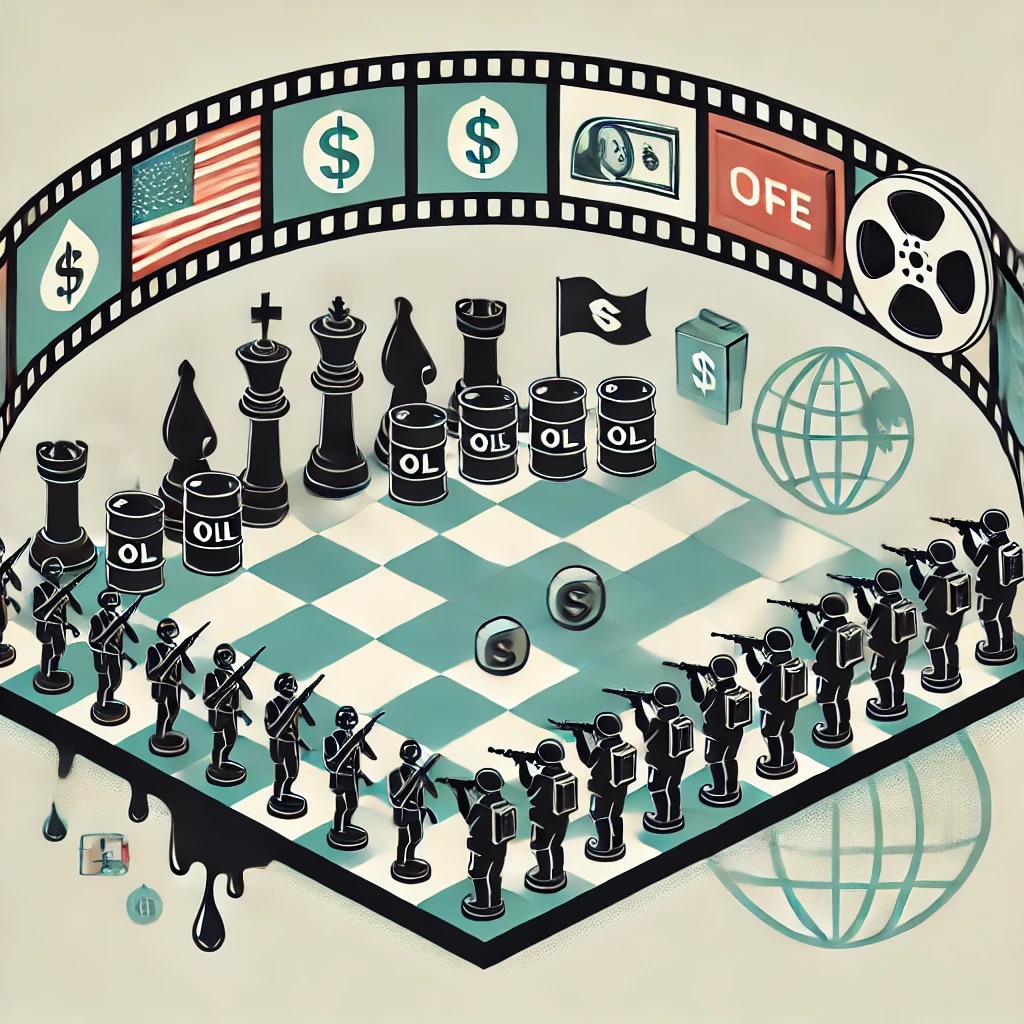
The story of American and Western interventions in Vietnam, Iraq, and Libya is not one of liberation or the spread of democracy, despite the official narratives we’ve been told. Instead, these wars serve as a testament to the power of capitalist interests, propaganda, and the manipulation of global perception. The reality behind these interventions reveals a pattern of resource control, geopolitical dominance, and the calculated suppression of any system or nation that challenges the capitalist status quo.
The False Justifications
Take Vietnam as the first chapter in this tale. The official story was that the U.S. needed to intervene to stop the spread of communism in Southeast Asia. The Gulf of Tonkin incident, the supposed catalyst for American military escalation in 1964, was later revealed to be largely fabricated. Yet, it provided a convenient excuse for the U.S. to deploy its military might, supposedly in the name of defending democracy. In reality, the U.S. was terrified of socialism gaining ground—a system that threatened the core principles of capitalism, which prioritise private wealth over collective well-being.
Fast forward to Iraq in 2003, and the narrative became even more dangerous in its deception. The American and British governments sold the war on the claim that Saddam Hussein possessed weapons of mass destruction (WMDs). The WMDs, much like the Gulf of Tonkin incident, turned out to be nonexistent. But the war was never about weapons or democracy—it was about securing control over Iraq’s vast oil reserves, protecting Western geopolitical interests in the Middle East, and, once again, ensuring that no system that might challenge capitalism could take hold.
Libya’s story, though framed as a humanitarian mission to stop a “mad dictator” from committing atrocities against his people, followed a similar script. Muammar Gaddafi’s regime was toppled in 2011 under the guise of protecting civilians. However, Libya’s descent into chaos post-intervention tells a different story. Gaddafi had been working on a gold-backed currency for Africa that could have challenged the dominance of Western currencies. Much like in Iraq, the true motives were regime change and resource control, not human rights.
Capitalism’s Grip on Power
In all three cases—Vietnam, Iraq, and Libya—the underlying issue was the threat to global capitalism. Capitalism does not thrive on competition as often claimed; instead, it consolidates wealth and power in the hands of a small elite. These elites, whether through multinational corporations, oil conglomerates, or financial institutions, have a vested interest in ensuring that no alternative system, such as socialism or independent nationalist regimes, can gain a foothold. The U.S. and its allies intervene not out of concern for democracy or security, but to protect this system.
The result is that wealth and power remain within closed circles, with resources such as oil becoming bargaining chips in a game of global dominance. In Vietnam, the U.S. feared that a socialist Vietnam would inspire other nations in Southeast Asia to reject capitalism. In Iraq and Libya, oil and strategic influence were the primary prizes. When you follow the money, the true motivations become crystal clear.
The Propaganda Machine
One of the most effective tools in maintaining these narratives is Hollywood. Films like Rambo and The Green Berets depict U.S. soldiers as heroic defenders of freedom, battling evil foreign enemies. These films, often released during or shortly after these conflicts, create a lasting impression that American intervention is always noble and necessary. The enemy—whether it be the Viet Cong, Middle Eastern terrorists, or despotic dictators—is reduced to a one-dimensional villain, making it easier to sell wars to the public.
Netanyahu, the Israeli Prime Minister, once said that Hollywood could be used as a powerful weapon against the U.S.’s enemies, underscoring the strategic role of media in shaping public perception. Hollywood has long had a strong Jewish presence, particularly among actors, directors, and studio executives. This influence can be seen in the way Middle Eastern leaders are often depicted as irrational or dangerous, feeding into a narrative that supports Israeli and Western geopolitical interests.
Films like The Delta Force and True Lies reinforce the trope of the Middle Eastern terrorist, aligning with broader U.S. policies in the region. Even comedic films like The Dictator play into stereotypes, using satire to portray Middle Eastern dictators as absurd and malevolent. This portrayal shapes how audiences view real-life conflicts and helps legitimise interventions that serve elite interests, such as the wars in Iraq and Libya.
Destabilisation Strategy
After these interventions, the regions left behind are often in worse shape than before. Vietnam suffered decades of war and devastation, Iraq descended into violent chaos, and Libya became a failed state after Gaddafi’s fall. These outcomes aren’t accidental. When countries are destabilised, they become more dependent on foreign powers for reconstruction and governance, allowing Western corporations and governments to maintain influence and control over their resources.
In this sense, destabilisation is a feature, not a bug, of these interventions. By leaving these countries in a state of chaos, the U.S. and its allies ensure that no strong, independent system can emerge to challenge their economic and geopolitical dominance. It’s a vicious cycle: intervene, destabilise, and then maintain control through reconstruction and foreign aid, all while ensuring that the wealth remains concentrated at the top.
The Hutton Inquiry and Whitewashing Truth
The death of Dr. David Kelly in 2003, shortly after he exposed the exaggeration of intelligence in the lead-up to the Iraq War, is a stark reminder of how far governments will go to protect their narratives. Kelly, a weapons expert, was found dead under suspicious circumstances, and the official investigation—the Hutton Inquiry—ruled his death a suicide. Yet, doubts remain, particularly around the manner of his death. His wrists were slashed in a way inconsistent with typical suicide attempts, and the amount of painkillers in his system was minimal.
The Hutton Inquiry, like many other internal investigations, was criticised for being more of a whitewash than a pursuit of truth. It protected the British government from facing accountability for its role in fabricating the WMD narrative, much like how other governments evade responsibility for the real motivations behind their interventions. It’s another example of elites investigating themselves, ensuring that no real consequences are faced.
The Empire’s Endless Game
From Vietnam to Iraq and Libya, the pattern is clear. These wars were never about protecting democracy or human rights. They were about preserving capitalist interests, controlling resources, and preventing any system—whether it be socialism or independent nationalism—that might challenge the global capitalist order.
Hollywood plays a key role in maintaining these narratives, while governments use biased investigations like the Hutton Inquiry to shield themselves from accountability. The result is a world where a small elite maintains control over wealth and power, while the rest of the world is left to pick up the pieces from endless wars fought in the name of false ideals.
The empire’s game is ruthless, but as history has shown, it is also unsustainable. The question is, how long will it take for the rest of the world to wake up to the truth behind these endless conflicts?
 The Narratives - Mohamed Miah
Leave a comment